How AlexNet Transformed Artificial Intelligence
In the world of AI, few innovations have reshaped the landscape as fundamentally as AlexNet. When it emerged in 2012, AlexNet introduced groundbreaking advancements in deep learning that propelled AI from a specialized research area into mainstream technology. Today, as developers, we work with highly evolved neural networks, but at the heart of many of our modern tools lies AlexNet’s DNA — its approach to scaling, its architectural insights, and its innovations in computational power.
From Pixels to Predictions: How Neural Networks Work
To understand AlexNet’s significance, it helps to first break down the fundamentals of neural networks — how they interpret data, build patterns, and, ultimately, make predictions.
The Basics: Vectors as Data’s DNA
In neural networks, data (whether images, text, or sound) is represented as vectors. Think of a vector as a list of numbers, each encoding specific features of the data. For example, an image might have vectors representing pixel colors or edge orientations, while in language, each word or phrase maps to a vector, or embedding, that holds its meaning in a high-dimensional space.
These vectors feed into the network’s layers, where they are transformed step-by-step, from simple patterns (like edges) to complex concepts (like cats, cars, or sentences).
Layers: The Architecture of Understanding
Neural networks consist of multiple layers that each perform a unique transformation on the input data. Early layers focus on fundamental details — edges, textures, colors — while deeper layers abstract these into high-level concepts. For example, in image processing, the first layer might detect the outlines of objects, while later layers recognize faces, animals, or scenes.
In large language models like ChatGPT, early layers detect basic syntactic relationships, while later layers handle context and meaning, allowing the model to generate nuanced responses.
Compute Blocks: The Network’s Engine
Each layer consists of compute blocks — small units performing fixed mathematical operations like multiplication, addition, and non-linear transformations. These blocks power the network, taking the vectors from one layer and passing transformed vectors to the next. For example, ReLU (Rectified Linear Unit) is a common activation function used in these blocks to introduce non-linearity, which lets the model handle complex patterns in data.
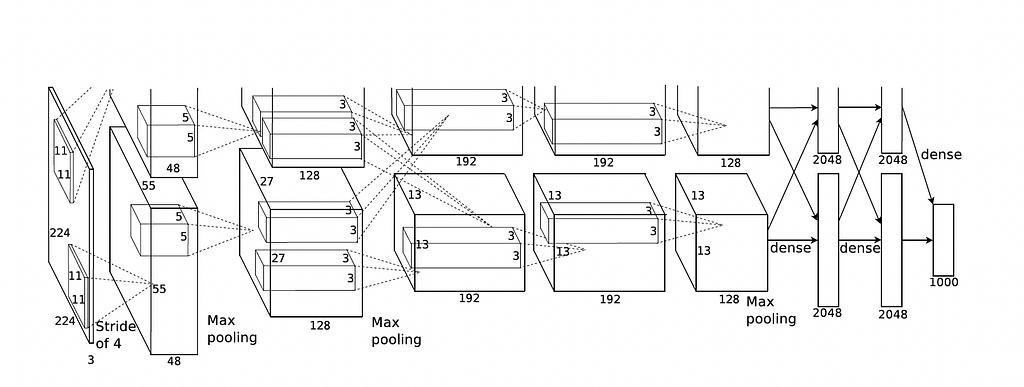
For AlexNet, these compute blocks were implemented as convolutional layers that specialize in finding local patterns in images. In transformer models like ChatGPT, each block operates on text fragments simultaneously, capturing relationships and context between words across an entire sentence.
Transformers: Contextualizing Data Across Layers
The breakthrough in models like GPT-4 is the transformer architecture, which processes data in parallel. Instead of reading one word at a time, transformers use self-attention layers to consider all words in a sentence simultaneously, building a context-aware representation for each. This is why ChatGPT can answer complex questions and understand nuances — it can weigh each word’s importance relative to the others, creating coherent responses.
The AlexNet Breakthrough: Setting the Standard for Modern AI
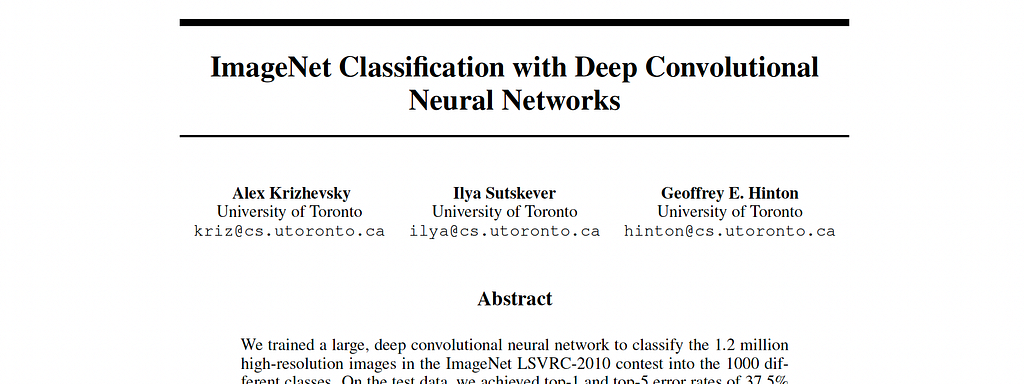
In 2012, AlexNet became a turning point in AI, especially in the field of computer vision. Developed by Alex Krizhevsky, Ilya Sutskever, and Geoffrey Hinton, AlexNet’s architecture showed that large-scale neural networks could be trained effectively with GPUs, and that they could outperform traditional image classification models on a massive scale.
Performance on ImageNet: A Historic Achievement
AlexNet was trained on the ImageNet dataset, a vast collection of over 1.2 million high-resolution images spread across 1,000 categories. When it entered the ImageNet Large Scale Visual Recognition Challenge (ILSVRC), AlexNet achieved an error rate of 17%, significantly outperforming competitors who averaged 25–30% error rates. This was more than just a win — it was proof that neural networks could tackle complex real-world data with accuracy, a validation that set the stage for deep learning’s explosion into other domains.
Building Blocks of AlexNet: Innovation in Architecture
AlexNet’s architecture was revolutionary, with five convolutional layers for feature extraction and three fully connected layers that classified the data. Several design decisions set AlexNet apart:
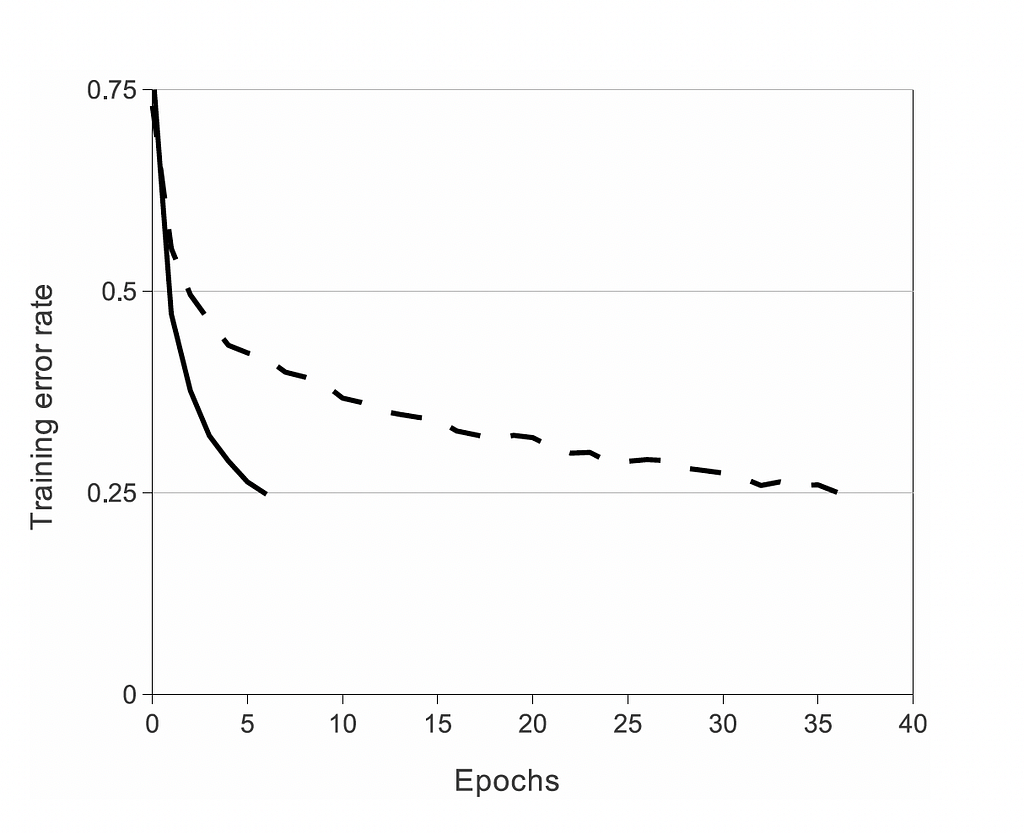
1. ReLU Activation: By choosing ReLU over traditional activation functions like tanh, AlexNet trained nearly six times faster. ReLU’s simplicity allowed the network to learn efficiently and reach deeper levels of understanding.
2. GPU Parallelization: To handle the large dataset and complex computations, AlexNet split the workload across two GTX 580 GPUs, each with 3GB memory. This innovation in cross-GPU parallelization laid the foundation for modern GPU-accelerated training, a practice now standard in AI.
3. Local Response Normalization (LRN): Inspired by biological neurons, LRN encouraged neurons to compete with each other, improving generalization. This technique reduced AlexNet’s top-1 error by 1.4%, a significant boost at the time.
4. Overlapping Pooling: By overlapping pooling layers, AlexNet could reduce overfitting while keeping output dimensions stable. This approach minimized information loss and further improved the network’s accuracy.
Scaling with Modern Hardware: From Dual GTX 580s to Lambda On-Demand
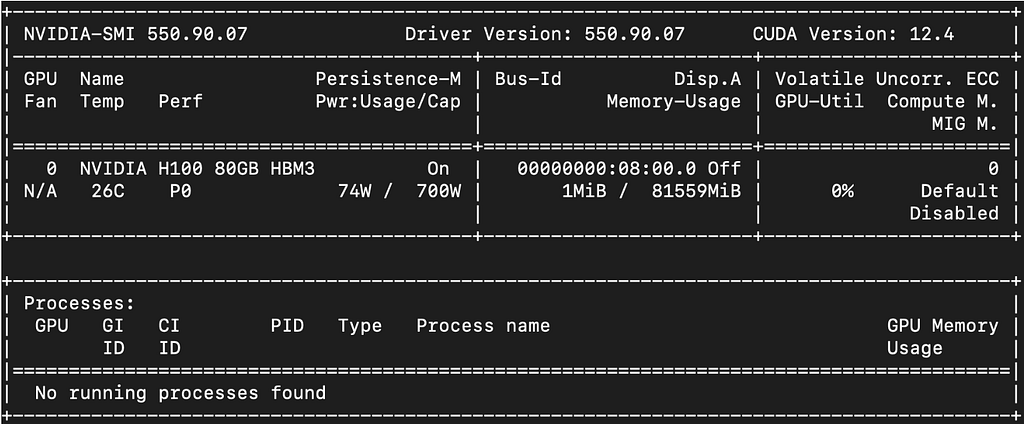
AlexNet’s training spanned five to six days on two GTX 580 GPUs, limited by memory and compute speed. Fast forward to today, and we’re using Lambda On-Demand instances with NVIDIA H100 GPUs, each with 80GB of memory and over 10 times the power of AlexNet’s original setup. These instances allow for high-speed training of massive models without the painstaking resource allocation AlexNet required.
On-demand access to such power allows us to iterate quickly, test models at scale, and deploy with unprecedented flexibility, all at $2.99 per GPU per hour. This flexibility is the key to modern AI development, where compute constraints are minimized, letting us focus on refining the model.
AlexNet’s legacy is a testament to how a single breakthrough can influence an entire field. By introducing scalable architectures and innovative training techniques, AlexNet not only achieved unprecedented performance in image recognition but also laid the foundation for the deep learning revolution that followed. Understanding AlexNet’s journey and its enduring impact provides invaluable insights into the evolution of artificial intelligence and inspires the next generation of AI advancements.